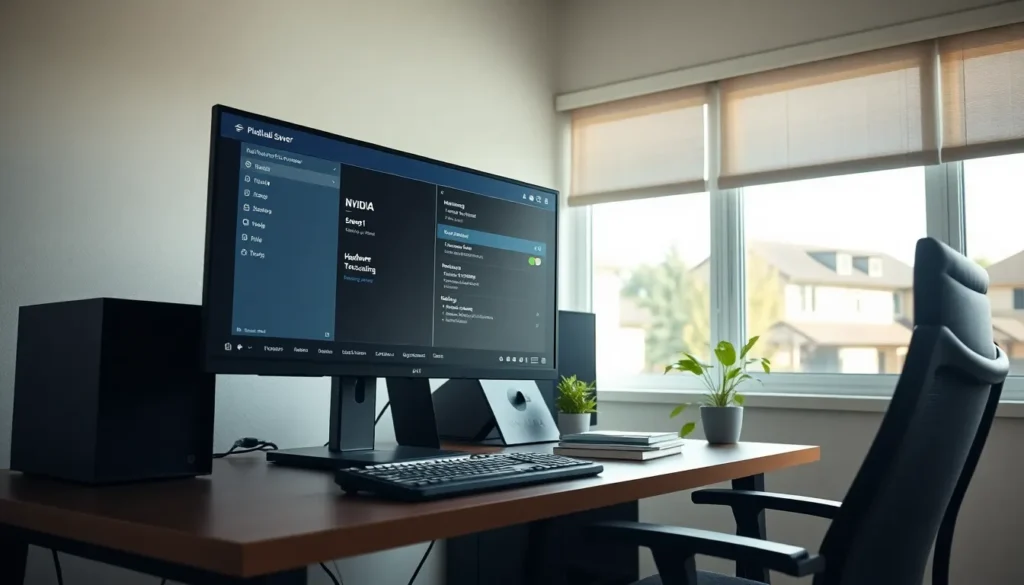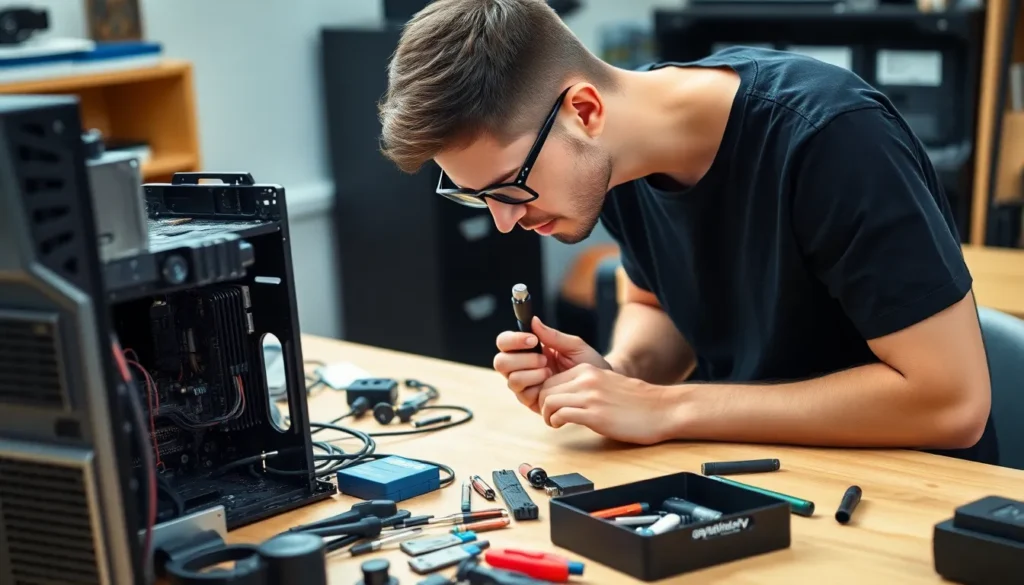

Ever wondered how your computer and that fancy printer or snazzy gaming console seem to speak the same language? It’s not magic—it’s all thanks to computer programs designed to bridge the gap between hardware and software. These programs act like translators, ensuring your commands don’t get lost in translation.
Overview Of Communication Between Computers And Hardware
Communication between computers and hardware relies on specific computer programs that act as intermediaries. These programs translate signals between the operating system and hardware components, ensuring seamless operation. Various devices, such as printers, graphics cards, and external drives, require tailored software to establish effective communication.
Operating systems like Windows and macOS include drivers for common hardware devices, providing essential support for various peripherals. Each driver serves as a unique program that translates commands from the OS into device-specific actions. These actions allow users to execute tasks like printing documents or gaming graphics processing.
Communication protocols govern how data is transmitted between devices. Common examples include USB, Bluetooth, and HDMI, each with distinct specifications for data exchange. These protocols ensure compatibility among diverse hardware, facilitating efficient interaction.
Data transmission occurs in several formats, including parallel and serial communication. Parallel communication sends multiple bits simultaneously, enhancing speed for devices like printers. Serial communication, on the other hand, transmits data bits sequentially, often used for slower connections like keyboards and mice.
User commands input through software trigger responses in hardware. An example includes a command to print a document, activating the printer driver to process the request. The driver interprets the command and communicates directly with the printer, initiating the printing process.
Lastly, troubleshooting hardware communication often involves checking driver installation and updates. Ensuring the correct drivers are installed minimizes errors and enhances performance. Regular updates provide the latest compatibility and feature enhancements, maintaining optimal communication between computer programs and hardware devices.
Importance Of Computer Programs In Hardware Interaction

Computer programs play a crucial role in enabling seamless communication between hardware devices and software applications. These programs ensure that commands from users translate accurately into actions performed by hardware components.
Role Of Drivers In Communication
Drivers act as essential intermediaries, bridging the gap between the operating system and hardware devices. They translate input commands into specific actions relevant to each device. For instance, a printer driver converts a document into a format that the printer can understand. Additionally, when users upgrade their operating systems or add new hardware, updated drivers help maintain compatibility, ensuring optimal performance. When a driver malfunctions or becomes outdated, users might face communication issues, emphasizing the need for regular updates.
Types Of Communication Protocols
Communication protocols dictate how devices exchange data, ensuring effective interaction. USB serves as a widely used protocol for connecting peripherals like keyboards and mice, providing fast data transfer rates. Bluetooth allows for wireless communication, linking devices over short distances without physical connections. Other protocols, like TCP/IP, facilitate data exchange over networks, making internet connectivity possible. Knowing the differences among these protocols helps users optimize the performance of their hardware devices in various scenarios.
Key Features Of Effective Communication Programs
Effective communication programs possess distinct features that enhance interactions between computers and hardware devices. These features streamline operations for users and ensure reliable performance.
User Interface Design
User interface design plays a vital role in communication programs. Intuitive layouts allow users to navigate effortlessly, promoting engagement with software and hardware functions. Icons and menus offer quick access to essential features. Clear instructions reduce user confusion, facilitating efficient task completion. Customizable settings empower users to tailor experiences to their preferences. A visually appealing design fosters a positive interaction, encouraging prolonged use.
Error Handling Mechanisms
Error handling mechanisms are crucial in communication programs. Robust systems detect issues promptly, minimizing user frustration. Informative error messages guide users through troubleshooting steps. Automatic recovery options restore functionality quickly, ensuring smooth operation. Logging errors aids developers in identifying and fixing recurring problems swiftly. Transparent communication about errors enhances user trust in the software’s reliability and performance.
Popular Computer Programs For Hardware Communication
Various computer programs facilitate communication between a computer and hardware devices. These programs come in both open-source and commercial formats, catering to different user needs and preferences.
Open-Source Options
Open-source programs offer flexibility and community support for hardware communication. For instance, Arduino IDE allows users to program Arduino boards, enabling them to control various hardware components seamlessly. libusb serves as a library that facilitates USB device access on multiple platforms. Processing provides an environment for visual arts and interactive graphics, useful for hardware integration. Users appreciate the collaborative nature of open-source projects, as these programs often include forums for troubleshooting and user engagement.
Commercial Software Solutions
Commercial software solutions frequently provide advanced features and dedicated support. MATLAB stands out for its robust data analysis capabilities and extensive support for hardware interfacing, such as with microcontrollers. LabVIEW specializes in system design and automation, allowing users to create intricate test and measurement applications. Companies often rely on tools like SolidWorks, which integrates directly with 3D printers and other manufacturing devices. Dedicated support from vendors enhances user experience, ensuring efficient hardware communication and troubleshooting.
The ability of computer programs to facilitate communication between hardware devices and software applications is crucial for modern technology. These programs not only ensure that user commands are accurately translated into hardware actions but also enhance overall user experience through intuitive interfaces and effective error handling.
With the continuous evolution of technology and the increasing complexity of devices, staying updated with the latest drivers and communication protocols becomes essential for optimal performance. By understanding the tools available—whether open-source or commercial—users can make informed choices that best suit their needs.
Ultimately, the seamless interaction between software and hardware is what empowers users to leverage technology effectively in their daily tasks.