

The world of insects can often be confusing, especially when two similar-looking beetles like the Japanese beetle and the June bug come into play. Both pests can wreak havoc on gardens and landscapes, but understanding their differences is crucial for effective pest management.
Japanese beetles, with their distinctive metallic green bodies and coppery wings, are notorious for their voracious appetite for a variety of plants. In contrast, June bugs, or June beetles, tend to be larger and are often brown or black, making them easily mistaken for their Japanese counterparts. By examining their unique characteristics and behaviors, gardeners can better protect their plants and maintain a healthy ecosystem.
Overview of Japanese Beetles and June Bugs
Japanese beetles (Popillia japonica) and June bugs (Phyllophaga spp.) are common garden insects that pose threats to various plants. Japanese beetles exhibit a distinctive metallic green color with coppery-brown wing covers. These small beetles measure about 0.5 inches in length and prefer feeding on leaves, flowers, and fruits. Their voracious appetite can quickly lead to significant plant damage, especially to roses, grapes, and linden trees.
June bugs, on the other hand, encompass several species within the Phyllophaga genus. They are generally larger than Japanese beetles, measuring around 0.75 to 1.25 inches. June bugs often feature a smooth, hard shell that is brown or black. Unlike Japanese beetles, June bugs typically emerge in late spring or early summer, drawn to lights during the night. While they primarily feed on plant roots during their larval stage, adult June bugs can also damage foliage.
Both beetles share overlapping ranges and feeding habits, contributing to confusion in identification. Japanese beetles tend to be more prevalent in areas with diverse vegetation, while June bugs are often found in suburban and rural settings. Recognizing their physical characteristics and behavioral patterns aids in effective pest management strategies for gardeners.
Physical Characteristics
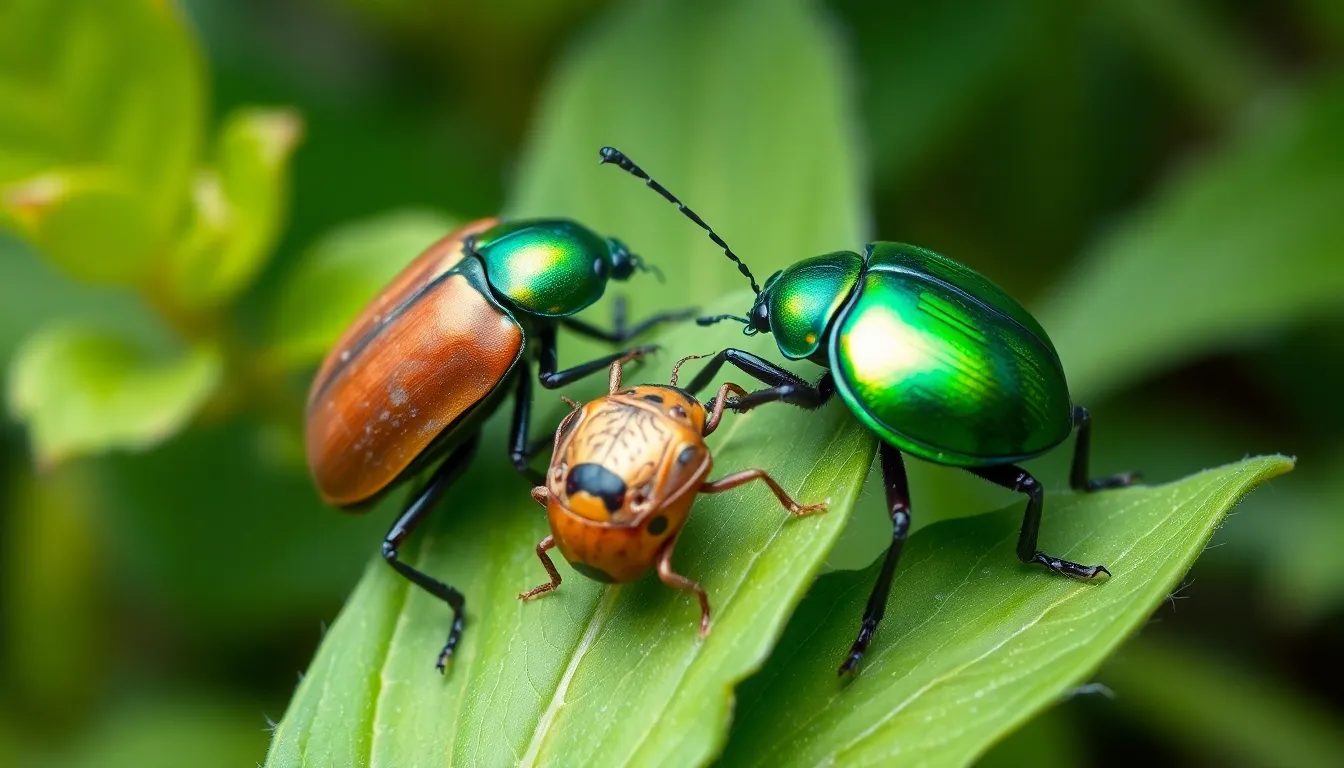
Identifying Japanese beetles and June bugs relies heavily on their distinct physical features. Understanding these characteristics aids in their management in gardens and landscapes.
Japanese Beetle Features
Japanese beetles measure about 0.5 inches in length and possess a unique metallic green body with bronze-colored wing covers. Their legs are long and covered with small white tufts, which are characteristic of the species. The beetles exhibit a rounded shape and have a smooth exterior, making them recognizable. Eyes are prominent, and short, clubbed antennae help in detecting scents. Adults are noted for their voracious feeding habits, particularly on the leaves of roses, grapes, and linden trees.
June Bug Features
June bugs, generally ranging from 0.75 to 1 inch in length, display a more robust and oval shape compared to Japanese beetles. Their color varies between dull brown and black, providing a more muted appearance. June bugs have a less glossy finish, with a more rugged texture. Their legs are stout and designed for digging as larvae, primarily feeding on plant roots. Adults feature longer, more segmented antennae that resemble serrated leaves. This difference in antennae shape is key in distinguishing them from Japanese beetles.
Behavioral Differences
Behavioral differences between Japanese beetles and June bugs play a significant role in identifying and managing these pests. Their feeding habits and activity patterns vary, influencing how they interact with their environment.
Feeding Habits
Japanese beetles feed actively during the day, targeting a wide range of plants, including roses, grapes, and linden trees. They can consume entire leaves, leaving behind skeletonized foliage. They also feed on flowers and fruits, significantly damaging ornamental and agricultural plants. June bugs exhibit different feeding habits; adults primarily feed at night during late spring and early summer. Their diet consists mainly of foliage and flowers, but they primarily damage roots as larvae, which can lead to decline in grass and other plants. Understanding these feeding behaviors aids in tailoring pest control strategies effectively.
Activity Patterns
Japanese beetles are diurnal, actively searching for food and mating from morning until dusk. They are drawn to bright colors and flowers, making them especially noticeable in gardens during the day. In contrast, June bugs are nocturnal, typically emerging at dusk to feed. Their flying pattern includes clumsy, erratic movements, often leading to collisions with structures or foliage. This distinction in activity patterns reveals optimal times for observation and control, allowing gardeners to manage populations more effectively.
Life Cycle and Habitat
The life cycles of Japanese beetles and June bugs involve distinct stages, from egg to adult, and their habitats vary based on environmental conditions and behaviors.
Japanese Beetle Life Cycle
Japanese beetles undergo a complete metamorphosis consisting of four stages: egg, larva, pupa, and adult. Adults emerge in late spring, typically from late May to early July. After mating, females lay eggs in moist soil, with each female producing 40 to 60 eggs. These eggs hatch into larvae, commonly known as grubs, within two weeks. The larvae feed on organic matter and plant roots during their development, growing over three distinct stages, or instars, before pupating in late summer. Pupation occurs underground for several weeks, after which the adults emerge the following spring. Japanese beetles thrive in areas with warm, sunny climates that support lush vegetation.
June Bug Life Cycle
June bugs also undergo a complete metamorphosis, revealing a life cycle consisting of egg, larva, pupa, and adult stages. Adults generally emerge in late spring to early summer, around May to June. Females deposit approximately 50 to 200 eggs in well-drained soil, often near vegetation. Hatched larvae, known as white grubs, feed on roots and organic matter for several months, transitioning through three instars before entering the pupal stage. Pupation typically occurs in late summer or early fall, lasting a few weeks before the adults emerge in the spring. June bugs favor areas with rich soil and ample plant material for feeding, impacting agricultural and garden environments significantly.
Pest Control Methods
Effective pest control methods exist for managing both Japanese beetles and June bugs, ensuring the protection of gardens and landscapes.
Strategies for Japanese Beetles
- Handpicking: Collect Japanese beetles during the day to reduce their population. Place collected beetles in soapy water to eliminate them.
- Traps: Utilize pheromone traps specifically designed for Japanese beetles. Position traps away from desirable plants to lure pests effectively.
- Neem Oil: Apply neem oil as a natural insecticide, disrupting the beetles’ feeding and reproductive patterns. Regular applications help maintain control.
- Beneficial Insects: Introduce beneficial insects, such as parasitic wasps, that target Japanese beetle larvae. Promoting biodiversity aids in controlling their populations.
- Cultural Practices: Implement crop rotation and planting resistant plant varieties. These strategies help minimize Japanese beetle attraction.
Strategies for June Bugs
- Soil Management: Promote good drainage and reduce organic debris to discourage June bug larvae from feeding. Maintain healthy soil conditions.
- Milky Spore Treatment: Use milky spore bacteria as a long-term solution for controlling June bug larvae. This natural method infects and reduces grub populations over time.
- Insecticides: Apply targeted insecticides in the early summer when adult June bugs emerge. Ensure products are appropriate for garden use.
- Traps: Construct homemade traps using light to attract and capture adult June bugs. Position traps in shaded areas where they congregate at night.
- Diatomaceous Earth: Sprinkle diatomaceous earth in garden beds to deter larvae. This natural substance damages the exoskeleton of the grubs upon contact.
Recognizing the differences between Japanese beetles and June bugs is vital for effective pest management. Their distinct physical traits and behavioral patterns play a crucial role in identifying these pests. Gardeners can implement targeted strategies to protect their plants from damage. By understanding their life cycles and feeding habits, individuals can take proactive measures to minimize the impact of these beetles. With the right knowledge and techniques, maintaining a healthy garden becomes much more achievable.